
Trends in Real Estate Q3 2026


This letter is part of a long tradition of providing the current trends that Elmhurst witnesses in commercial real estate. During the past year or so, I have been asked if we utilize AI for these updates. The answer is that we fully believe in AI, and all the resources it provides, but these letters contain only what Elmhurst directly observes, hears about firsthand, or reads in original sources. AI is great, but you don’t need us to use it and repeat it back to you.
General Real Estate Investing:
A few current patterns within the real estate industry (in no specific order):
1) During these times of volatility, investors will pay an extra premium for real estate assets with longer weighted average lease terms (colloquially called “WALT” in the industry).
2) Higher interest rates hurt the seller, not the buyer, as the buyer will lower the value of the asset due to the increased future burden of the cost of debt.
3) High construction costs can subsequently lead to increased values for similar existing assets. If you must pay 30% more for new construction, you may tolerate paying 10% more for a similar existing asset.
4) High costs of tenant buildouts lead to fewer tenant relocations. And if a tenant does move, there is an increased tendency to utilize existing built out “second generation” space.
5) A recent sign that the real estate debt market is strengthening is the current balance between the multiple segments of lenders, such as banks, CMBS, pension funds, and life companies.
6) The last ten years have witnessed major shifts within the categories of “office jobs,” yet “office jobs’” percentage of overall employment has been surprisingly consistent at around 22%.
7) The halos over the regions that flourished with their “meds and eds” are starting to fade, as medical centers are impacted by lower reimbursements, and many universities are disrupted by decreased enrollments and government cutbacks. I recently heard a national real estate investor state he is less focused on “meds and eds” and more on “well leds,” meaning regions with efficient local governments that are also business friendly.
8) Finally, the office sector needs to do a better job with holding rents, as the industry doesn’t emphasize enough that quality space can be more cost efficient, provide higher employee satisfaction, and elevate corporate image, while these lease costs can be as low as sixth in the ranking of corporate expenses.
Industrial
Industrial development has slowed compared to the Covid years, when developers could not build fast enough to keep up with demand. The frenzy was not only for traditional warehouses, but also with E-commerce fulfillment centers, which, due to their unique layouts for the “pick and pack” processes (people and robots), require nearly three times the square footage for the same amount of product that is stored in a traditional warehouse.
Many of the new industrial facilities are now designed for more complex tenant needs, such as redundant and heavy load power, industrial level and load bearing flooring for automation, and integrated data infrastructure. Power, of course, is the main driver these days and, for speculative buildings, a “chicken and the egg” challenge. Utility companies do not want to commit their limited electricity without a user, while the developer struggles to market the building without a committed long term power source. And to pile on, timelines for securing transformers, turbines, and other electrical infrastructure continue to drag out due to the combination of the supply shock with suppliers not wanting to store excess parts during these complex times (read on/off tariffs) and demand shock from the boundless growth of data centers.
Another unique characteristic of the industrial sector is the incompatibility for retrofitting older warehouses and/or converting obsolete facilities such as unused call centers. There is little appetite with users for space that does not have the specific layout, height, and parking needs. Older buildings can make quality office and residential conversions, but this does not work as well with distribution centers.
Increased automation could de-emphasize the need for local workforces and thus lead to more remote locations with cheaper land. The automated warehouse machines are also being designed to work alongside people (nicknamed “co-bots”), with many robots looking more like humans. The automation is getting so independent that most robots require little oversight, as they even know when to return to their charging stations.
Office
An ongoing theme has been the transforming of traditional office into “experiential environments.” Urban office towers and suburban office parks have added hospitality approaches, such as yoga classes, complimentary EV charging, full-service gyms, food trucks, and even farmers markets in their parking lots. Furthermore, office users have learned to provide a sense of control for their employees regarding how and where they work. For example, newer layouts try to avoid having public rooms that can be “off limits,” furniture that can’t be moved, or even a “clean desk” policy, as it perpetually reminds employees that their workspace is not their own.
Office occupancy levels of course remain challenged throughout the country, with some exceptions such as San Francisco and Midtown Manhattan. What is unique, though, is that average rents for new leases are stable and/or even moderately higher. Economics would tell us that decreased demand leads to lower pricing, but with office, the matrix is different. Tenants that do move migrate to superior spaces with greater amenities. They are paying more per square foot but are taking less space, and thus at a similar overall cost. Also leading to this economic anomaly of stabilized rents in a soft market, the “inferior” buildings are no longer able to drop their rents, because with the current high cost of tenant buildouts, new leases are uneconomical. Therefore, most “B” and “C” building owners are waiting on the sidelines and/or looking to convert to residential.
Elmhurst has completed lobby renovations and added fitness centers and communal conference space in many of our office buildings, a competitive advantage, but also a double whammy with the additional cost of building the space, and now with tenants no longer requiring their own conference rooms, they are also able to lease less from us.
A small aside, the residential conversion market had a setback this summer when a large office to residential project in New York City became national news after several columns buckled due to the added weight and redesign of the old Pfizer office building. Office to residential conversions can be major projects that can severely alter the load factors in a building. This incident will not stop the conversion processes, but will slow down approvals in certain markets such as New York City.
The positive news is the office markets are stabilizing without any new supply. In addition, lenders have been slow walking back into lending into the office sector, albeit primarily focused on stabilized and well positioned properties with strong ownership. This is progress, though, when compared to a few years ago, when most office owners felt like they had some form of leprosy.
Hotels
The overall hotel industry is doing well, but with a barbell-shaped revenue pattern. The customers are primarily coming from the lower and upper ends of the spectrum. Luxury travel is strong, presumably due to people’s ever-expanding stock portfolios, whereas those not as fortunate have become more price-sensitive and are migrating towards the lower end properties. Another recent revenue driver for budget hotels has been the influx of transient construction workers for the data centers. Furthermore, the dearth of international travelers has had a material impact on gateway markets, a phenomenon only interrupted by the World Cup.
On the subject of the World Cup, many of the host cities met expectations with the number of spectators but were disappointed in the amount of corporate and group travel that avoided those markets during the tournament. LA will need to learn from this with their upcoming 2028 Olympics.
Furthermore, because of these “unknown times,” travelers are waiting to see what is happening before they decide to travel, leading to short booking periods. Elmhurst’s hotels have witnessed a record level of bookings “in the month for the month” during the past summer. There were even times when we had a profusion of “day within the day” reservations.
Personal leisure business continues to be sustained by events and experiences, such as sports and concerts. As we all know, artists can’t make a living solely from Spotify, and thus now need to perform more live concerts to make up the deficit. One “sub” trend, though, is certain performers are now pursuing a “mini residency” model, which requires their fans to travel to them rather than the other way around. One current example is Harry Styles’ 40 concert tour this year that was solely in New York, London, and Amsterdam. Of course, this model has existed in Las Vegas for decades.
Beach holidays will never disappear, but newer generations are migrating more towards adrenaline packed holidays (nicknamed “Darecations”), with such activities as rock-climbing, white-water rafting, and even paragliding. Travelers may still stay in hotels and inns, but their days are more focused on finding that Instagram moment for everyone back home to see. Another interesting subset of this group is viewers recreating their favorite movie or TV shows. Paddington boosted travel to Peru, Emily in Paris, Game of Thrones in Dubovik, Yellowstone in, well, Yellowstone, and of course, White Lotus capturing the imaginations of rich people acting badly respectively in Maui, Sicily, and Thailand.
Staying with the theme of social media, our downtown Pittsburgh hotel has had at least four full renovations during my tenure at Elmhurst, and each time it took months to “get the word out.” But with our recent renovation this spring, we experienced an immediate uptick in business, presumably due to the trend of prospective guests no longer interested in reviewing pictures on traditional hotel websites but rather more inclined to believe real-time uploaded social media photos from the hotel’s recent guests. AI is also dismantling the “google monopoly” for hotel searches, as search optimization has dramatically transitioned. Instead of just capturing someone searching for “a boutique hotel near the stadium,” creating the AI prompts now requires far more specification and differentiation. AI searches may recommend a non-boutique hotel farther from the stadium if the AI agent has found a hotel that also satisfies the prospect’s profile and/or previous experiences. AI is also disrupting the “online” travel agents. For example, this year’s Expedia’s Annual Report openly acknowledged AI’s threat to their business model.
The travel industry and its co-branded credit cards remain huge business. It may not be an exaggeration to say the airline industry would not survive if they suddenly lost the credit card redemption revenue. Maybe not quite the same for hotels, but it is still extremely important for them. So much so that Marriott franchisees recently sued Marriott over its loyalty program, Bonvoy, as they claimed they had been paying into the fund while not getting their fair share of its revenue. Finally, these programs also have complicated reimbursement formulas for the host hotel accepting these loyalty points. The hotel is paid for each redemption in an amount equal to a percentage of that night’s average room rate. The percentage, though, increases considerably when certain higher occupancy levels are achieved, leading to the (apocryphal?) story of the GM that sold, with his own money, a room to his in-laws to tip the occupancy over the level leading to a total reimbursement that now far exceeded the cost of his in-laws’ room.
Data Centers
What a difference a few months make. States that previously chased the data operators are now publicly condemning them for what they claim as “multiple ills to society.” Here in Pennsylvania, it has become a “political football" with our Governor (who, as an aside, will undoubtably be running for president) initiating new executive orders making development of these centers more challenging. And it’s not just the Keystone state, the Governor of Texas also publicly came out against what he termed “freewheeling” data center development. At least in the Pittsburgh region, water is not an issue in the aggregate, but as always, it is more complicated as there is not yet enough infrastructure to get the needed water from the rivers directly to some of the proposed centers. Finally, it is worth noting, US golf courses utilize vastly more water than data centers.
The bigger issue with these centers is power usage. Regions are now requiring new data centers to “bring their own power” (also called “BTOP”), so as not to disrupt the pricing within the regional grids. Data center operators are consequently locating facilities next to proprietary power plants, and some are even pursuing the idea of small onsite nuclear power generation. Microsoft went even further and signed a 20-year lease for the famed Three-Mile Island Nuclear plant. The grid challenges are also not the same everywhere in the country. There are still regions that are “under capacity” that can absorb new users, which spreads the utility’s fixed costs and therefore decreases the local consumer’s electrical rates.
Another trend with the data centers is their impact on overall construction costs within the real estate industry. Spending on data centers is up 20% from last year and now accounts for over 8% of all commercial real estate construction. This is specifically impactful with items such as concrete, copper wire, and of course transformers. Furthermore, it can be nearly impossible to secure a qualified electrician in certain regions of the country.
Finally, data centers are even impacting the debt markets. The industry now carries $1.3 trillion of debt, an amount of issuance large enough to begin to influence interest costs.
Electrical Grid
There may be no issue more important to grow our economy, assist onshore manufacturing, temper climate change, and keep all our monthly expenses down, than to upgrade the country’s electrical system. As recently as the year 2000, US electrical demand was stagnant or even decreased due to the transition from incandescent lightbulbs to LED’s and fluorescent lights. The next positive impact came from the fracking boom, which reduced natural gas prices, a feed source for electricity. The lower demand and cheaper generation costs, though, only provided a temporary sense of security. Twenty-five years later, the grid now faces major headwinds with, among others, 1) new demands arising from the proliferation of EV vehicles and the growth of air conditioning, 2) costly impacts from increased natural disasters, and 3) the ongoing loss of efficiencies with its aging systems. Furthermore, local utilities can have a bias against capital expenditures, as they encounter short term political pressure to not raise rates to pay for those huge investments that are only “for the future.”
What would be the solutions? The New York Times made the statement that we need to treat the grid as a national asset like we did in the1950’s with the Interstate Highway System. The country should consider creating better coordination between the multiple utility companies, providing a national mandated strategy to decrease the timing and cost of permitting, and employing a more cohesive strategy for where and when new capital projects should be built. And if any entity oversees these strategies, it will need to be independent, and ideally not located within the Beltway.
Wrap Up
Real estate has always been a cyclical business, and most downturns occurred due to excessive optimism and subsequent overbuilding. Not surprising in an industry that takes years to plan and complete a project, many times spanning multiple cycles. Development can also be a “Rubiconian” line of business, nearly impossible to stop once a project has been initiated. The good news is that this post-Covid market is different. There is a lot of discipline in the industry, whether internally generated or imposed from “above” with the capital and debt markets. For example, office developers are not “on the sideline waiting to get back in the game,” they are out. And it is not just office, high costs for new construction and elevated interest rates have limited the development within all the real estate sectors. The real estate market therefore currently provides investors unique opportunities with the market stability due to the lack of new (and sometimes previously irrational) competition. The real estate industry will always need to “house the economy,” and even with, and maybe even because of, the challenges previously discussed, the right investments could hopefully now provide even higher risk adjusted returns.
As always, though, we will have to wait and see where all these trends take us …


Latest News and Perspectives
Staying connected with Elmhurst's evolving story
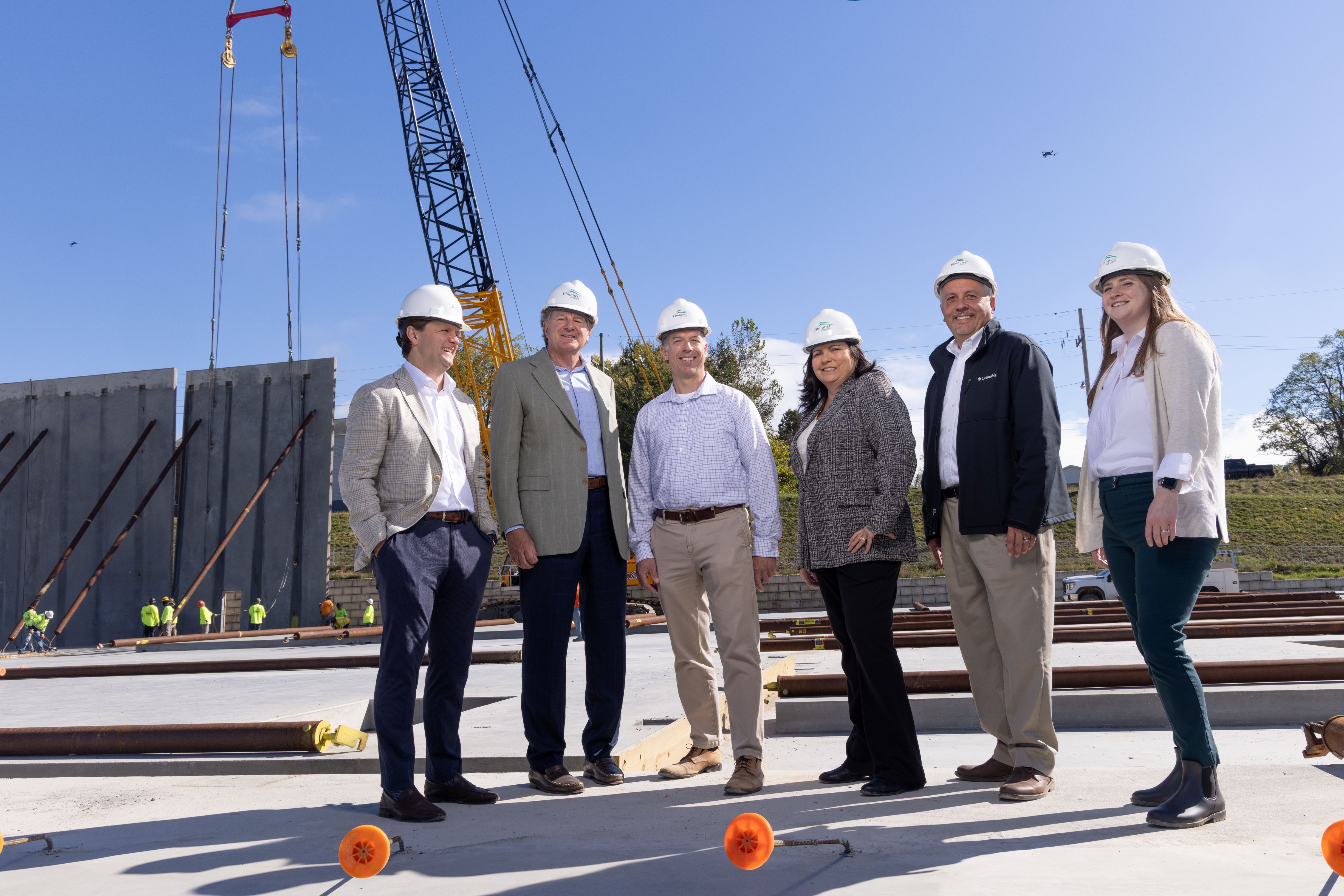
What leaders in Pittsburgh's development community are saying about patient capital and urban transformation.

Stay Updated With Elmhurst Insights
Subscribe to our newsletter and receive expert perspectives on real estate, urban development, and Pittsburgh's evolving landscape.